
The Ultimate Guide to the 8 Most Common Types of Shirt Printing Are you planning to create custom t-s
The Ultimate Guide to the 8 Most Common Types of Shirt Printing
Are you planning to create custom t-shirts for your business or an event? You’ll need to know about the different types of shirt printing available.
In this guide, we’ll look at the eight most common t-shirt printing techniques, from the most basic ones to embroidery and even combined techniques.
We’ll start with the two most popular t-shirt printing methods: screen printing and direct-to-garment printing. We’ll then move on to heat transfer methods, including sublimation and vinyl printing.
Last but not least we’ll discuss other types of t-shirt printing for achieving unique results.
So, whether you’re looking for a simple solution or something more complex, this guide will help you find the right t-shirt printing technique for your needs.
The Most Popular T-Shirt Printing Types
Two of the most popular types of printing on t-shirts, where the ink is put directly on the garment, are screen printing and direct-to-garment (DTG) printing. In this section, we’ll look more closely at both of them and discuss their pros and cons.
Direct-to-Garment Printing (DTG)
Direct-to-garment or DTG printing uses an inkjet printer to print the artwork – as the name suggests – directly onto the garment. DTG printing offers a full-color, high-quality print, making it ideal for complex designs or photographic images.
Keep in mind that inkjet printers are pricey but other than that, they do not have any setup costs and are therefore more cost-effective for smaller orders. If you need just a few t-shirts, the DTG printing method is your best option.
This process requires a pre-treatment step as the inks are printed directly onto the fabric of the t-shirt, and pre-treating allows the ink to be nicely fixed and won’t let it soak through the material. Additionally, the t-shirt needs heating before printing to activate the treatment process.
Pros:
- Perfect for detailed multi-color designs
- Fast production – a t-shirt is made within minutes
- Inks penetrate the fabric; you won’t feel the print when touching it
Cons:
- Best suited for 100% cotton t-shirts or blends with the right percentage of cotton for the print to come out more vivid
- DTG printing washes out over time
- Limited print area – you can’t cover the entire t-shirt with your designs
- DTG printing machines are costly
Screen Printing
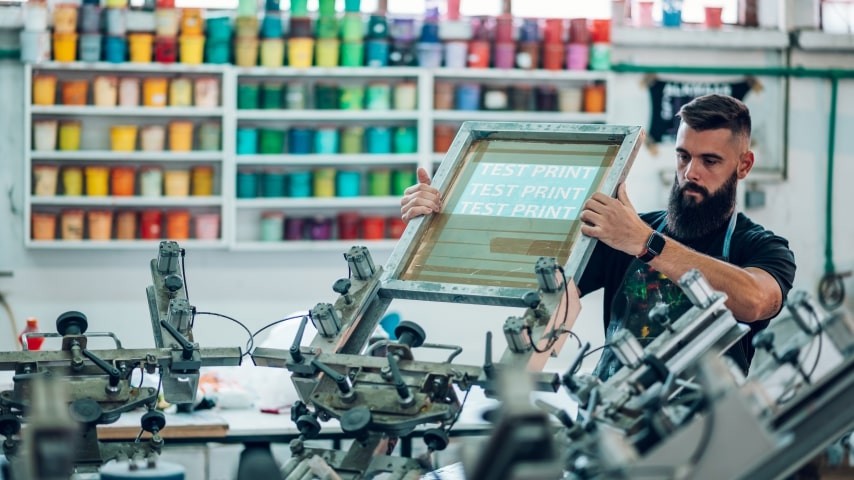
Screen or silkscreen printing is a stencil-based printing technique where ink is applied to the t-shirt through a mesh screen.
It’s the most popular printing method and has been around for decades – first done by hand and now by printing machines.
It uses special screen printing inks that are thicker than those used for other printing methods, resulting in very vibrant, longer-lasting prints. As opposed to DTG printing, screen printing is better suited for designs with fewer colors.
Silkscreen printing is ideal for large orders up to 500 t-shirts, as it is relatively quick and easy to set up. However, it can be more expensive for smaller orders, as there is a setup cost involved.
Pros:
- Screen printing ink is deeply absorbed into fibers, which results in stunning vibrant prints
- Fast printing process for large amounts of t-shirts
- Can be used on most materials – cotton, polyester, and various blends
- Screen-printed t-shirts can withstand countless wash cycles without fading
Cons:
- Limited printing area – this printing method won’t be suitable for covering the whole t-shirt
- If you’re thinking of doing this at home, keep in mind that screen printing ink tends to spill all over, and it’s pretty messy
- Limited colors – you won’t be able to achieve an extremely colorful design or print a super vivid photograph on your t-shirt
Heat Transfer Printing Methods
Of the many different methods for printing t-shirts, heat transfer printing is one of the most popular. This uses a heat press to transfer an image or design onto the t-shirt.
Heat transfer printing is different from both previous methods since it doesn’t require any special inks or dyes – all you need is a heat press machine and transfer paper.
Heat transfer printing is a great option for custom t-shirts because it’s versatile. You can print almost any design or image onto a shirt, including all-over-print designs that cover the entire t-shirt.
All the methods listed below are essentially subtypes of the heat-press printing technique, so to choose what’s best for your t-shirt printing business, let’s look at each of them.
Dye Sublimation or All-Over Printing (AOP)
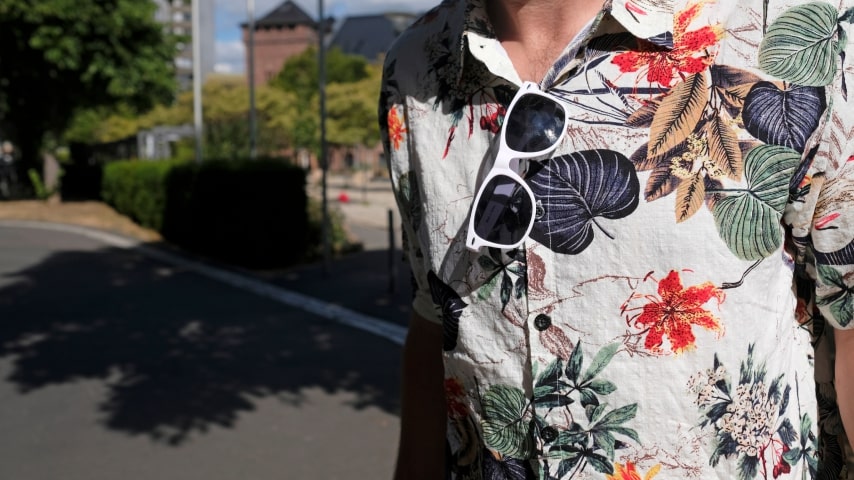
Dye sublimation printing, also known as all-over-printing (AOP), is probably among the most popular types of shirt printing. The printing graphics are digitally printed onto a special heat transfer paper which is then transferred onto t-shirts by applying heat.
Dye-sublimation heat press method uses dye-based ink that turns into gas upon heating, which is an entirely different process from the other heat transfer printing techniques mentioned later in the article.
The applied pressure and heat turn the dye-based ink into a gas and then back to a solid state. It is perfect for synthetic fibers like polyester fabrics. As the dyes penetrate the fibers to the core, they become one with the material, resulting in vivid and long-lasting t-shirt prints.
Dye sublimation printing can’t be used with cotton, which is very porous, causing so-called bleeding – the result looks dull and blurry.
Synthetic materials rule here – the higher the percentage of polyester, the better the end result. This method is best with white polyester t-shirts, as dark base colors don’t work as well because the dyes completely integrate with the fibers of the material.
The screen printing process and DTG printing can’t be used for all-over printing, so you can be more creative with the dye sublimation method in your t-shirt business.
Pros:
- Sublimation printing gives you long-lasting results, as the dyes fully penetrate the fibers so the designs are bright and vivid, even after countless washes
- One of the best t-shirt printing options for longevity, as the colors will not crack or fade
- Cover the entire polyester t-shirt from seam to seam for stunning end results
Cons:
- Can’t be used on dark fabrics; all of the all-over-print t-shirt blanks are white, as the dyes need to penetrate the fabric and it’s impossible to see on a dark base color.
- Can’t be used on cotton t-shirts. Only garments with a high percentage of polyester, as its fibers are smooth and not as absorbent as natural fibers.
- More expensive than other printing methods
Direct-to-Film Printing (DTF)

Direct-to-film printing, or DTF, is one of the best t-shirt printing techniques and involves printing designs onto a special PET film (Polyethylene Terephthalate) and then transferring them to a t-shirt using adhesive powder and heat.
As opposed to DTG printing, DTF doesn’t require pre-treatment of the garment, as the design is pre-printed onto a film.
This heat transfer method can be used on any type of fabric. Create polyester t-shirts or cotton t-shirts – the result is equally good.
However, in DTG the design and inks are incorporated into the fabric. With the DTF method, the fixing powder renders the design plasticky and shiny. Because the colors do not interfere with the base color of the t-shirt, it gives a more vibrant end result.
Pros:
- DTF method allows printing on a wide range of fabrics
- Gives bright and beautiful prints, as the designs are applied on the fabric without penetrating the fibers
- Can be transferred onto any base color
- High wear & tear resistance
Cons:
- Can only be used on smaller items like t-shirts, cushion covers or face masks
- The print feels rather plasticky
- The whole process is more complex than dye sublimation or DTG printing
Plastisol Transfers
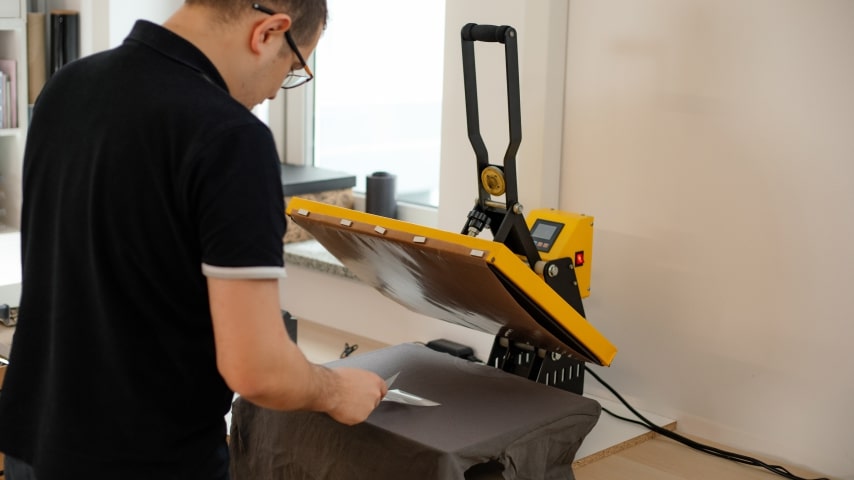
In the list of heat press printing, we need to mention plastisol transfers. This is a type of indirect screen printing – the methods are a bit similar, but instead of printing directly on the t-shirt, the design is first put on heat transfer paper.
Plastisol heat press printing can be applied to a range of fabrics, not just cotton or polyester – neoprene and some nylons will also work.
Plastisol transfers are a widespread alternative to silkscreen printing and other printing methods, as it’s cheaper for lower product quantities.
The first step in this heat transfer method is placing the plastisol transfer paper under a screen on a printing machine. Sand-like grain is then distributed across the paper to prevent the design from blurring.
The plastisol ink is printed directly onto the plastisol paper, then aligned with the t-shirt on the heat press machine, which is used to transfer the design from the paper to the t-shirt.
Thanks to the parchment paper used in the process, it’s also possible to achieve special effects, such as a glossy or textured finish.
Pros:
- Various finishes
- Extremely durable – the print won’t crack or fade
- Great for creating t-shirts with the same design but small differences, for example sports teams, where you need to change names or player numbers
Cons:
- Can’t print photo t-shirts
- You can only print full tones; no half-tones
- Not ideal for large t-shirt quantities, as each product requires its own paper print
CAD Heat Transfer Vinyl Printing
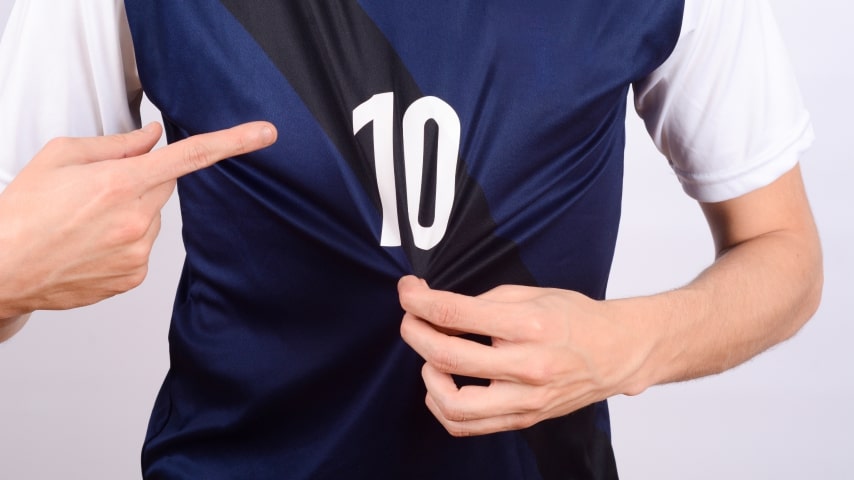
Computer-Aided Design or CAD heat transfer vinyl printing is mostly used for printing the player numbers, names, and logos on athletic team t-shirts or jerseys, requiring a very precise cutting of the material.
A machine cuts out CAD designs on pieces of colored heat transfer vinyl which are then put onto the t-shirt with a heat press.
As with most other types of shirt printing techniques, this requires special equipment – a CAD cutting machine for precise lettering. This t-shirt printing method gives a rather stiff result because of the vinyl used in the process.
Pros:
- Great for sports team t-shirts
- Can be applied anywhere on the garment
- Any type of fabric will work
Cons:
- Can only be used for text-based designs
- Because of the precise cutting, the process takes a long time
Other Printing Techniques
Besides DTG and heat press printing, there are other types of shirt printing that you can use to apply your t-shirt designs onto a garment. With these methods, you can achieve slightly different products for your t-shirt business.
Embroidery
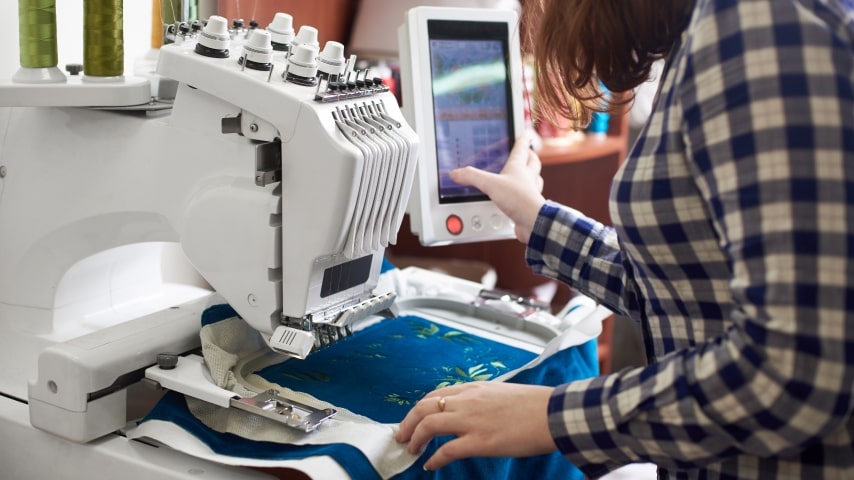
Embroidery is a great way to add a bit of intricacy to your t-shirts. Embroidered logos look more sophisticated than what the vinyl printing method can achieve.
When you want to create a t-shirt design using embroidery, you need to follow strict design requirements, as the designs are made with a sewing machine, not a printer. The color variations are limited, as is the print area. However, embroidery will last longer than any other printing method.
Pros:
- Extremely durable
- Looks professional and timeless
- No dyes involved, more eco-friendly
Cons:
- Not suitable for detailed designs
- Smaller product range
- Very strict design requirements
- More pricey than other t-shirt printing methods
Airbrushing
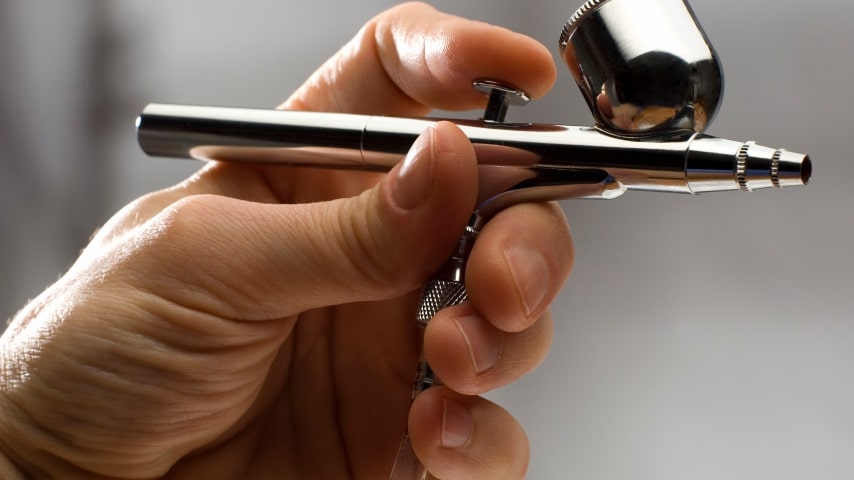
This is very different from all the other t-shirt printing methods mentioned above, as it does not require any transfer paper like sublimation printing or any other heat press technique. Actually, it does not require any DTG printers or other machines at all. Airbrushing is completely manual work done by hand.
This t-shirt design technique is preferred by hobbyists as it gives plenty of room for experimenting. Keep in mind that the outcome heavily depends on your skill level and how steady your hand is.
Airbrushing or spray-painting t-shirts is considered pretty messy and requires a well-ventilated room. But other than that, all you need is a stencil of what you want on your t-shirt and securing it safely onto the garment. Then you spray until it’s ready.
Pros:
- Can be easily done at home
- Cheap
- Lots of room for creativity
- Joy of DIY
Cons:
- Low design quality
- The t-shirt print is not long-lasting
- Unsuitable for large volumes
Which T-Shirt Printing Methods Should You Choose?
When it comes to printing t-shirts, you have many options for creating beautiful products. If the types of shirt printing above seem a bit overwhelming, we’re going to help you out.
It all comes down to whether you want to print complex designs, invest in a DTG printer, or trust the process to a printing company like Tshirts4africa to handle your heat press or DTG ideas from A to Z.
Also consider what types of designs you have in mind: a small logo, large designs or an intricate print
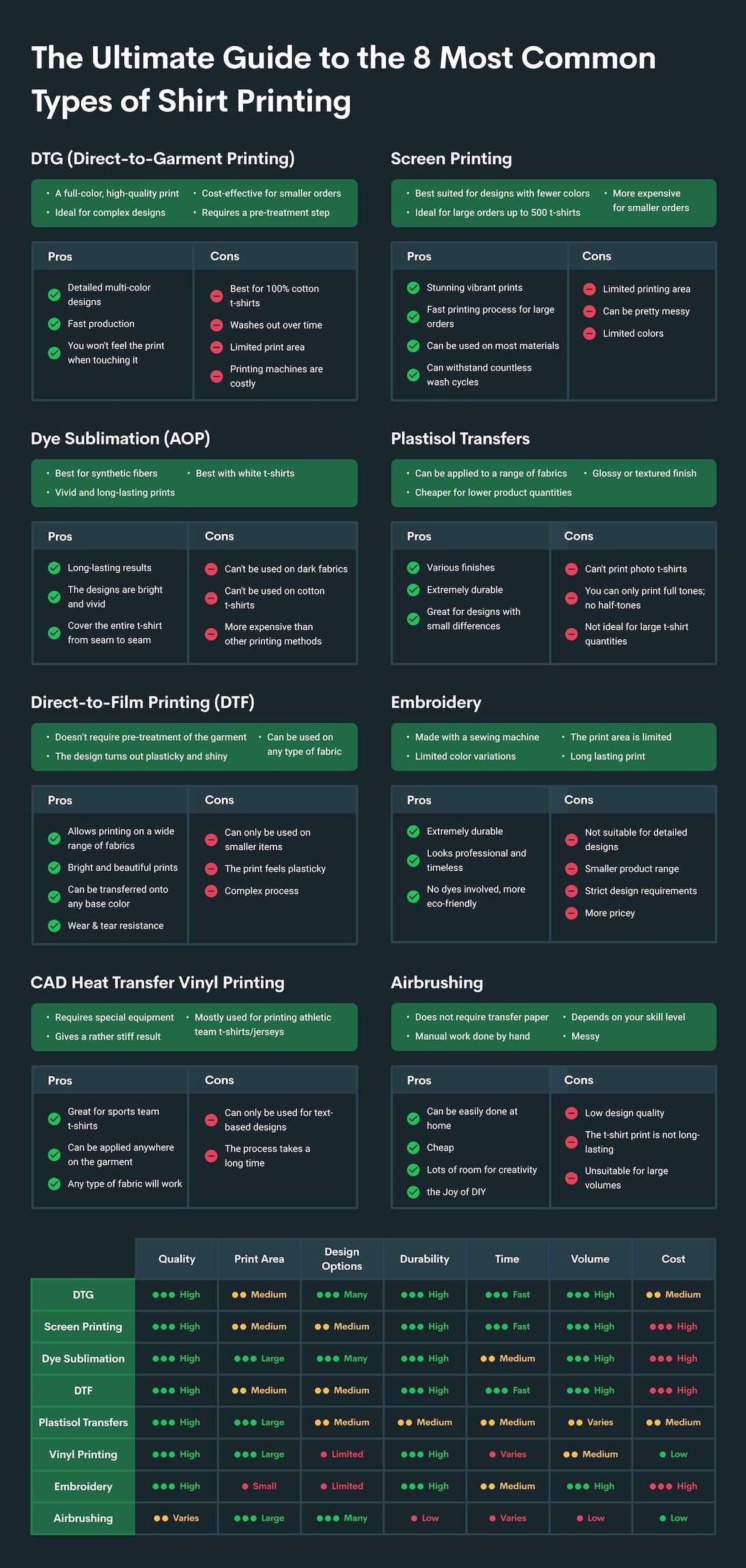
Let’s compare them all:
| Quality | Print Area | Design Options | Durability | Time | Volume | Cost | |
|---|---|---|---|---|---|---|---|
| DTG | High | Medium | Many | High | Fast | High | Medium |
| Screen Printing | High | Medium | Medium | High | Fast | High | High |
| Dye Sublimation | High | Large | Many | High | Medium | High | High |
| DTF | High | Medium | Medium | High | Fast | Medium | High |
| Plastisol Transfers | High | Large | Medium | Medium | Medium | Varies | Medium |
| Vinyl Printing | High | Large | Limited | High | Varies | Medium | Low |
| Embroidery | High | Small | Limited | High | Medium | High | High |
| Airbrushing | Varies | Large | Many | Low | Varies | Low | Low |

COMMENTS